| Session 23 Wednesday April 22, 6:00pm – 7:30pm AMC/LOEWS Boston Common: 175 Tremont St. Boston |

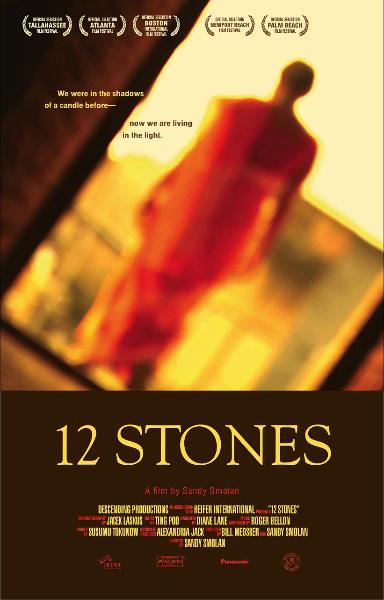
12 Stones 22min
“12 Stones” is a beautiful and evocative short by award
winning filmmaker Sandy Smolan about the remarkable
journey out of poverty of a group of illiterate women
from the impoverished village of Belsi in southern
Nepal. The village of Belsi lies off the main highway that
connects Nepal to India, a dusty torturous road that
winds down from the Katmandu Valley. Most homes don’
t have windows, running water or electricity. A multi-
ethnic, multi-lingual, small and astoundingly beautiful
country, Nepal is also one of poorest countries in the
world, with nearly half the people living below the
poverty line. Outside of Africa, no country is poorer.
What distinguishes Belsi from most other villages is that
next to crumbling mud and thatched roof shacks are
solidly constructed concrete homes, with vegetable
gardens and cleanly swept yards. The difference is
breathtaking. And instead of the shy and reserved
women that inhabit most villages in the region, we meet
Shanti, Sita, and Parabati, the women of Belsi. Working
with Heifer International, a aid organization that
promotes sustainable development through gifts of
livestock, the women are now helping hundreds of other
women and their families rise out of poverty. Deeply
moving and with breathtaking cinematography,'12
Stones' captures the remarkable transformation these
women have undergone and illuminates the idea that
you can bring an entire village out of poverty by first
empowering its’ women to be self-sufficient. The film is
narrated by Diane Lane.
Director, Producer: Sandy Smolan
Producer: Bill Medsker
Associate Producer: Alexandra Jack
_______________________________________
Poto Mitan 50min
Told through compelling lives of five courageous
Haitian women workers, Poto Mitan gives the global
economy a human face. Each woman’s personal story
explains neoliberal globalization, how it is gendered,
and how it impacts Haiti. And while Poto Mitan offers in-
depth understanding of Haiti, its focus on women’s
subjugation, worker exploitation, poverty, and
resistance demonstrates these are global struggles
Marie-Jeanne details dual struggles as a woman and
worker: employed in a garment factory, she toils under
miserable conditions to give her children the schooling
she was denied because of education's high costs and
gender discrimination. Living and braving death in Cité
Soleil, Solange details how Haiti’s current violence
stems from a long-brewing economic crisis and the
global apparel industry’s inherent instability. Frustrated
with male-dominated unions, Frisline joined a woman’s
organization, offering a gendered and class analysis of
Haiti’s contemporary situation. Working for thirty years,
Thérèse brings a historical perspective and a
comparative analysis. Thérèse’s ailments also highlight
the critical state of public health. Pushed off her land by
foreign agricultural policies, Hélène leads a new
grassroots campaign against violence, encouraging
women to defend themselves. These five brave women
demonstrate that despite monumental obstacles in a
poor country like Haiti, collective action makes change
possible. Initiated by the subjects themselves, Poto
Mitan aims to inspire solidarity activism to end injustice
in the global economy. Our struggles have a common
thread. Fighting for justice: for women, workers, or Haiti
can’t help but bring about our own liberation.
Associate Producer: Gina Ulysse
Co-Director: Mark Sculler
Co-Director; Coproducer: Renee Bergan
Executive Producer: Mary Becker
“12 Stones” is a beautiful and evocative short by award
winning filmmaker Sandy Smolan about the remarkable
journey out of poverty of a group of illiterate women
from the impoverished village of Belsi in southern
Nepal. The village of Belsi lies off the main highway that
connects Nepal to India, a dusty torturous road that
winds down from the Katmandu Valley. Most homes don’
t have windows, running water or electricity. A multi-
ethnic, multi-lingual, small and astoundingly beautiful
country, Nepal is also one of poorest countries in the
world, with nearly half the people living below the
poverty line. Outside of Africa, no country is poorer.
What distinguishes Belsi from most other villages is that
next to crumbling mud and thatched roof shacks are
solidly constructed concrete homes, with vegetable
gardens and cleanly swept yards. The difference is
breathtaking. And instead of the shy and reserved
women that inhabit most villages in the region, we meet
Shanti, Sita, and Parabati, the women of Belsi. Working
with Heifer International, a aid organization that
promotes sustainable development through gifts of
livestock, the women are now helping hundreds of other
women and their families rise out of poverty. Deeply
moving and with breathtaking cinematography,'12
Stones' captures the remarkable transformation these
women have undergone and illuminates the idea that
you can bring an entire village out of poverty by first
empowering its’ women to be self-sufficient. The film is
narrated by Diane Lane.
Director, Producer: Sandy Smolan
Producer: Bill Medsker
Associate Producer: Alexandra Jack
_______________________________________
Poto Mitan 50min
Told through compelling lives of five courageous
Haitian women workers, Poto Mitan gives the global
economy a human face. Each woman’s personal story
explains neoliberal globalization, how it is gendered,
and how it impacts Haiti. And while Poto Mitan offers in-
depth understanding of Haiti, its focus on women’s
subjugation, worker exploitation, poverty, and
resistance demonstrates these are global struggles
Marie-Jeanne details dual struggles as a woman and
worker: employed in a garment factory, she toils under
miserable conditions to give her children the schooling
she was denied because of education's high costs and
gender discrimination. Living and braving death in Cité
Soleil, Solange details how Haiti’s current violence
stems from a long-brewing economic crisis and the
global apparel industry’s inherent instability. Frustrated
with male-dominated unions, Frisline joined a woman’s
organization, offering a gendered and class analysis of
Haiti’s contemporary situation. Working for thirty years,
Thérèse brings a historical perspective and a
comparative analysis. Thérèse’s ailments also highlight
the critical state of public health. Pushed off her land by
foreign agricultural policies, Hélène leads a new
grassroots campaign against violence, encouraging
women to defend themselves. These five brave women
demonstrate that despite monumental obstacles in a
poor country like Haiti, collective action makes change
possible. Initiated by the subjects themselves, Poto
Mitan aims to inspire solidarity activism to end injustice
in the global economy. Our struggles have a common
thread. Fighting for justice: for women, workers, or Haiti
can’t help but bring about our own liberation.
Associate Producer: Gina Ulysse
Co-Director: Mark Sculler
Co-Director; Coproducer: Renee Bergan
Executive Producer: Mary Becker

| Click on the yellow icon to Buy tickets for this session |
